
The Friday fish fry in Venice, FL at Bogey’s Sports Pub is a $10 plate of three pieces of beer-battered Atlantic cod with crispy fries, served all day every Friday — one of the most consistent and well-priced fish fry deals on the Gulf Coast. If you have ever bitten into a piece of fried fish and found it greasy, soggy, or hollow-tasting, the problem was almost never the fish itself. It was the batter, the oil, or the timing. This guide breaks down exactly what separates a proper beer-battered fish fry from a forgettable one, and why those variables matter every time you order.
The Science Behind a Proper Beer-Battered Fish Fry
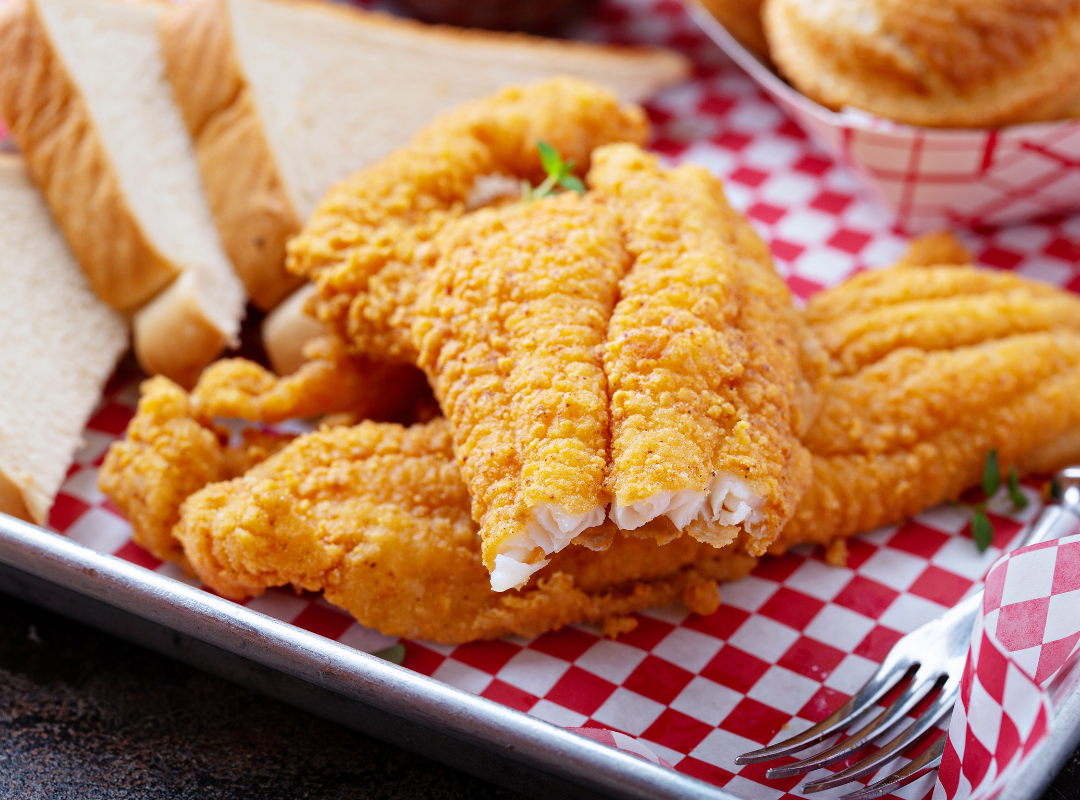

Oil Temperature: The Variable That Controls Everything
Oil temperature is the single most important variable in a beer-battered fish fry, and it is the one most often compromised in a high-volume kitchen. The correct frying temperature for beer-battered fish sits between 350 and 375 degrees Fahrenheit. Within that range, the exterior of the batter sets almost immediately on contact, creating a sealed crust that traps steam and cooks the fish from the inside out.
Below 350 degrees, the batter absorbs oil before it can set. The result is a heavy, greasy exterior that feels dense rather than crisp. The fish underneath takes longer to cook through, which compounds the oil absorption problem. Above 375 degrees, the exterior browns too quickly while the interior remains underdone — you get color without doneness.
A kitchen that maintains consistent oil temperature across a full Friday service is a kitchen that takes its fish fry seriously. The difference shows up in the first bite: a properly fried piece of battered fish should crack slightly when you cut into it, with a dry, aerated interior crust rather than a wet, oily one.
Batter Hydration: Why Beer Works and What It Actually Does
The beer in a beer batter is not decorative. It serves two functional purposes: carbonation and flavor. The carbonation in beer introduces CO2 bubbles into the batter mix, which expand during frying and create the light, aerated texture that distinguishes a proper beer batter from a dense flour-and-water coat.
The hydration level of the batter matters as well. A properly hydrated beer batter should coat the back of a spoon and flow smoothly without running off immediately. Too thin and the coating is insufficient — you get a translucent film rather than a crust. Too thick and the batter dominates every bite, burying the fish rather than framing it.
The flavor contribution from the beer is secondary but real. A lager-based batter adds a subtle malt note that pairs naturally with the clean, mild flavor of Atlantic cod. It does not overpower the fish — it complements it in a way that water-based batters cannot replicate.
Resting Time: The Step Most Kitchens Skip
Beer batter benefits from a short rest after mixing. Allowing the batter to sit for 20 to 30 minutes before use gives the gluten strands time to relax and the carbonation time to stabilize. Batter used immediately after mixing tends to be slightly tighter and less forgiving when applied to the fish. Rested batter adheres more evenly and fries more consistently.
This is a detail that separates a kitchen with a standardized fish fry process from one that treats it as an afterthought. It costs no additional ingredients and requires no special equipment — just discipline and a recipe that respects the process.
Why Atlantic Cod Is the Standard for a Fish Fry
Not all white fish performs equally under beer batter, and Atlantic cod has earned its status as the fish fry standard for specific, measurable reasons.
| Fish | Fat Content | Flake Texture | Under Batter |
|---|---|---|---|
| Atlantic Cod | Low (0.7g per 100g) | Large, clean flakes | Holds moisture well, does not steam out |
| Tilapia | Low (2.7g per 100g) | Small, soft flakes | Can turn mushy, mild flavor lacks presence |
| Pollock | Low (1.0g per 100g) | Medium flakes | Common cod substitute, slightly waterier texture |
| Catfish | Medium (4.0g per 100g) | Dense, firm | Strong flavor, works better with cornmeal coating |
Atlantic cod has a clean, mild flavor that does not compete with the batter, a low fat content that prevents the fish from steaming out excess moisture during frying, and a large flake structure that holds together under heat. The result is a bite that delivers distinct layers: crust, then cod, in the right proportion.
Common substitutes like pollock and tilapia are frequently used in lower-cost fish fry operations. Pollock is the closest approximation and often undetectable in a well-executed fry. Tilapia’s softer texture is more forgiving to work with in a kitchen but produces a less satisfying eating experience under batter, particularly as the plate cools.
Bogey’s Fish Friday: The Venice Value Benchmark
At $10 for three pieces of beer-battered Atlantic cod and crispy fries, Bogey’s Fish Friday represents one of the clearest value propositions in Venice dining. The $10 price point for a full fish and chips plate using Atlantic cod — not a lower-cost substitute — is only sustainable if the kitchen is running an efficient, standardized process. That operational discipline is what makes the price possible without compromising the product.
The plate is served all day every Friday, which means the same quality is available at noon as it is at 7 p.m. Arrive before 6 p.m. and Happy Hour pricing on select domestic drafts, house wines, and well drinks stacks directly on top of the fish fry deal. A cold lager alongside beer-battered cod is a pairing that exists for good reason — the carbonation cuts through the batter in the same way it functions inside it.
For a full picture of what is running every day of the week alongside Fish Friday, the Bogey’s weekly specials guide covers every daily and weekly deal in one place. The full menu is available alongside the Friday special throughout the day.
Frequently Asked Questions
Where is the best fish fry in Venice, FL?
Bogey’s Sports Pub on E Venice Ave serves a $10 Fish ‘n’ Chips plate every Friday, all day, featuring three pieces of beer-battered Atlantic cod with crispy fries. It is one of the most consistent and best-priced fish fry deals in Venice, FL.
What makes Atlantic cod the best fish for a fish fry?
Atlantic cod has a low fat content, large clean flake structure, and mild flavor that performs exceptionally well under beer batter. It holds moisture during frying without steaming out, maintains structural integrity on the plate, and does not compete with the flavor of a well-made batter the way stronger-tasting fish would.
What temperature should oil be for beer-battered fish?
Between 350 and 375 degrees Fahrenheit. Below 350, the batter absorbs oil before setting and produces a greasy result. Above 375, the exterior browns too quickly while the interior remains undercooked. Maintaining temperature consistency across a full service is the primary operational challenge in a proper fish fry kitchen.
Does Bogey’s serve fish fry every Friday?
Yes. Bogey’s Fish Friday runs every week, all day, with a $10 Fish ‘n’ Chips plate featuring three pieces of beer-battered Atlantic cod and crispy fries. Happy Hour drink pricing is also available from 2 to 6 p.m., making the pre-6 p.m. window the best combined value of the evening.
652 E Venice Ave, Venice, FL 34285 | 941-488-9156